

What is it?
What is Matter?
Matter is the Smart Home standard that everyone is talking about. Its been around since late 2022 and has a growing adoption.
Backed by the tech giants (Apple, Google, Amazon and Samsung SmartThings) and numerous other companies, it allows devices to communicate securely, with a common data model and APIs. Moreover it has a frustration free setup process (scan a QR code, tap an NFC with your smart phone) and the devices join to your home ecosystem.
Matter 1.5 added more energy management features – including EV chargers (EVSE) with Vehicle2Grid or Vehicle2Home (bi-directional) charging. But it supports multiple other device types too – Water Heaters, Heat pumps (HVAC), Solar and Battery Storage.
You can find out more about it https://csa-iot.org/all-solutions/matter/ and for more technical details https://handbook.buildwithmatter.com/
The source code for Matter is in the connectedhomeip repo.
What is EVerest?
Project EVerest is an open-source Linux based EV charger stack that several EV Charger manufacturers are starting to adopt. It makes it simpler to implement an EV charger by making modular components such as metering, OCPP support and ISO15118-20 bi-directional charging features. Unlike other open-source projects which are sometimes left to the goodwill of the community it is actively maintained by Pionix Gmbh.
You can find the documentation here: https://everest.github.io/
Why a bridge?
Manufacturers of EV Chargers don’t necessarily want to get into the details of Matter.
The Matter connectedhomeip repo is very large, complex with its own build system and numerous submodule dependencies. Since we are running on a Linux platform natively supported by Matter, and the fact that EVerest uses MQTT as a protocol to allow its modules to communicate, we built a ‘bridge’ to allow Matter to learn the state of the EVSE, and to also allow it to control it.
The https://github.com/adectio/connectedhomeip-everest repo is a fork from the upstream project-chip/connectedhomeip repo with additional MQTT translation layer built into the example evse-app. It uses the ‘Stable API’ of EVerest so should work out of the box with Everest 2026.02.1 release.
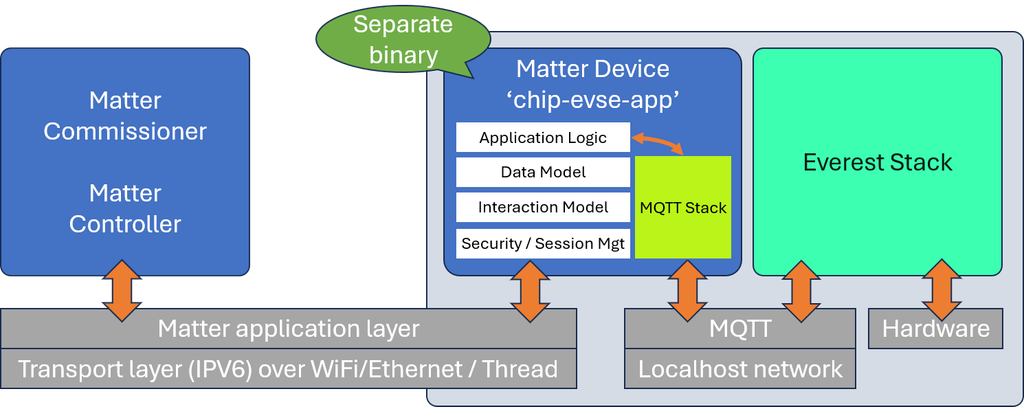
Removing cloud and OCPP CPMS dependencies
OCPP is great for public charging infrastructure, but often overkill for residential charging and relies upon a cloud CPMS. If consumers want to change their charging requirements, it requires bespoke app integration and cloud based optimisers (and “yet another Energy app” that the consumer has to download and manage).
Matter gives a consumer everything they need plus more features allowing the consumer to keep their devices connected in the home. Removing the burden on energy suppliers and EV OEMs to have to maintain highly scalable clouds and app integrations.
Devices work together, sharing pricing, total home grid power import & export from solar, and ensuring that your heat pump, solar, battery and EV charger work well together (without any cloud needed). Consumers can locally schedule their charging demand (in the EV charger), allowing it to optimise the charging schedule for lowest cost and CO2 by itself.
Price-aware scheduling
Matter 1.5 introduced the concept of a Price-server as well as Electrical Grid Conditions (GHGs – Green House Gas gms/CO2E per kWh). If you have something in your home that tells all of your devices WHEN it is cheaper and greener to run your appliances, then they can save you money and reduce your carbon footprint.
Devices could get this information from the internet themselves, but this relies on the consumer having to set this up on every device, and not all devices have the horse-power to run a HTTPS client, and handle all of the bespoke energy utility APIs to provide this data. For the consumer, they may not even know what their tariff they are on – creating unnecessary barriers for consumer adoption.
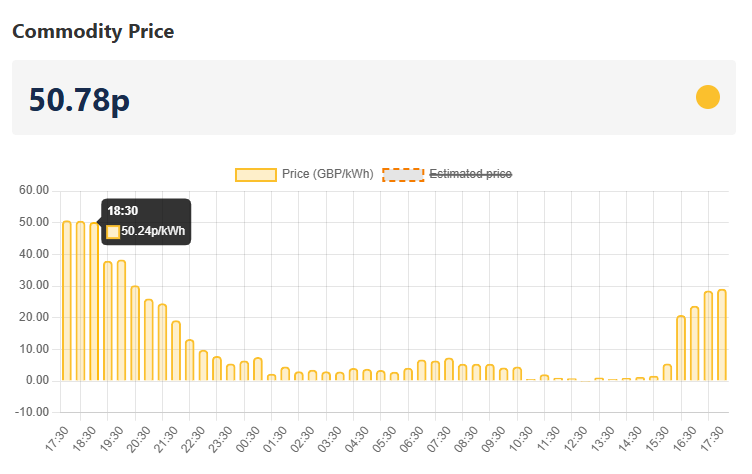
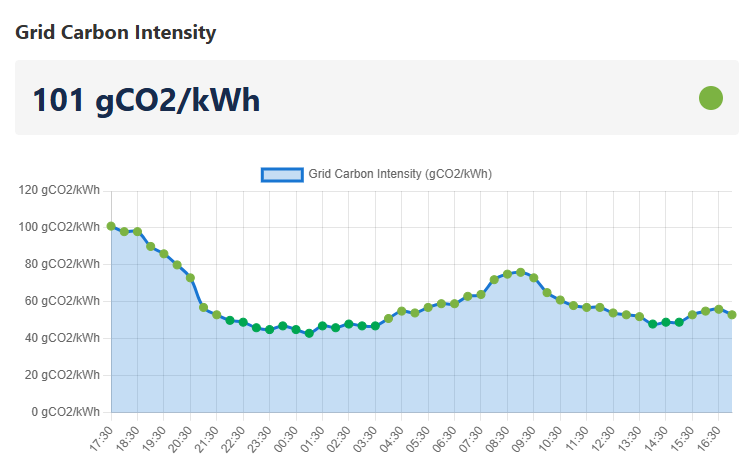
Matter fixes this by allowing a central device in the home to serve this data to all of the other devices. When the devices are commissioned they get ‘bound’ to the Price Server and then know where to ask for the data from.
Consumer sets their charging needs directly into the EV charger (V2X ready)
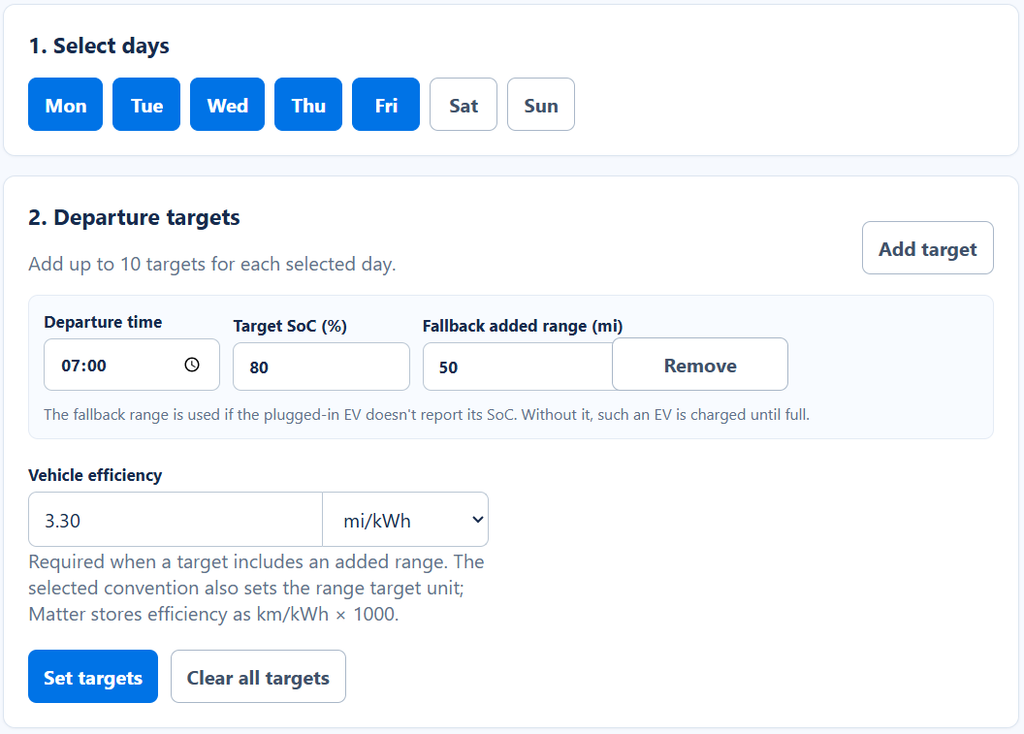
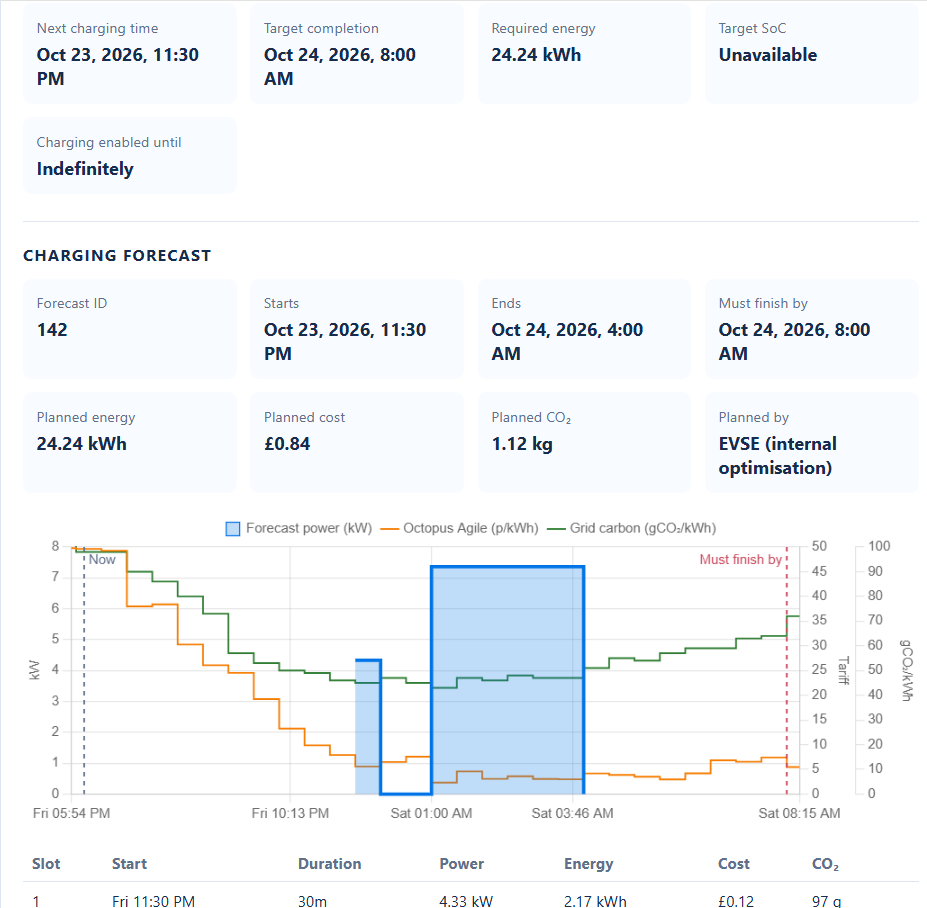
Once the charging targets are known, whenever the EV gets plugged in, it can auto-schedule the cheapest and greenest time to charge based upon the required energy. With V2G (ISO15118), the vehicle’s state-of-charge can be reported via the cable so the EV charger can now optimise based on consumer preferences locally.
Matter’s DEM (Device Energy Management) cluster can share this ‘power forecast’ back to a HEMS or other display to help inform the user and give them re-assurance its going to be charged in time. This power forecast can also be shared with the grid to allow flexibility service providers to optimise the grid at scale, or even at substation level if needed – asking individual Matter enabled EV chargers to shift when they use energy.
Where can I find out more?
Email us at info@adectio.com
Trying it out
Release binaries
Pre-built binaries for ARMx64 Linux: